The problem
Adaptive already let a security team clone their CEO’s voice and use it in fake phishing calls and training. In sales calls the team showed more than that, including deepfake video made by hand for each prospect.
Customers loved it in the demo. Once they were in the product they found a page of voice settings and no way to make a video. It was one of the biggest complaints from new customers, and it could derail a deal during the trial.
Deepfake video of your executive
In the product, made for you by Adaptive.
Deepfake phone call you can talk to
In the product.
Deepfake audio clips you make yourself
In the product.
Deepfake videos you make yourself
Shown in the demo. Not in the product.
Deepfake video you can talk to
Shown in the demo. Not in the product.
What customers asked for
We talked to five customers who had used the persona features. They asked for three things.
Manage it themselves
Find, make and change their deepfake videos without sending Adaptive a request.
Themed narrators
Celebrity or themed presenters for security training, so employees pay attention.
Live video
A persona they could put on a video call and talk to.
The first one was the complaint, so the first release was about that.
Choosing a model
The people inside Adaptive who made deepfakes had tried many models, and often built a one-off process to get a single good result. A customer can’t do that. For the tool to work without help I had to test the models and pick the one that failed least.
Customers rejected anything that broke the illusion. A wrong background or an odd gesture and they said “I don’t buy it,” and the video was no use for training. They were just as hard on likeness. If the face wasn’t exactly the person, they said so.
Veed
Kept the likeness best. A little stiff.
Runway
The most expressive, with the most movement in the scene.
HeyGen
Lifelike talking heads.
I kept the tool narrow on purpose. You upload a photo and write a script. It speaks the script in the person’s voice and moves the face in the photo to match. It doesn’t invent a scene or take open-ended prompts, because customers cared more about a believable face than about choosing the scene.
What I changed
Hid the settings
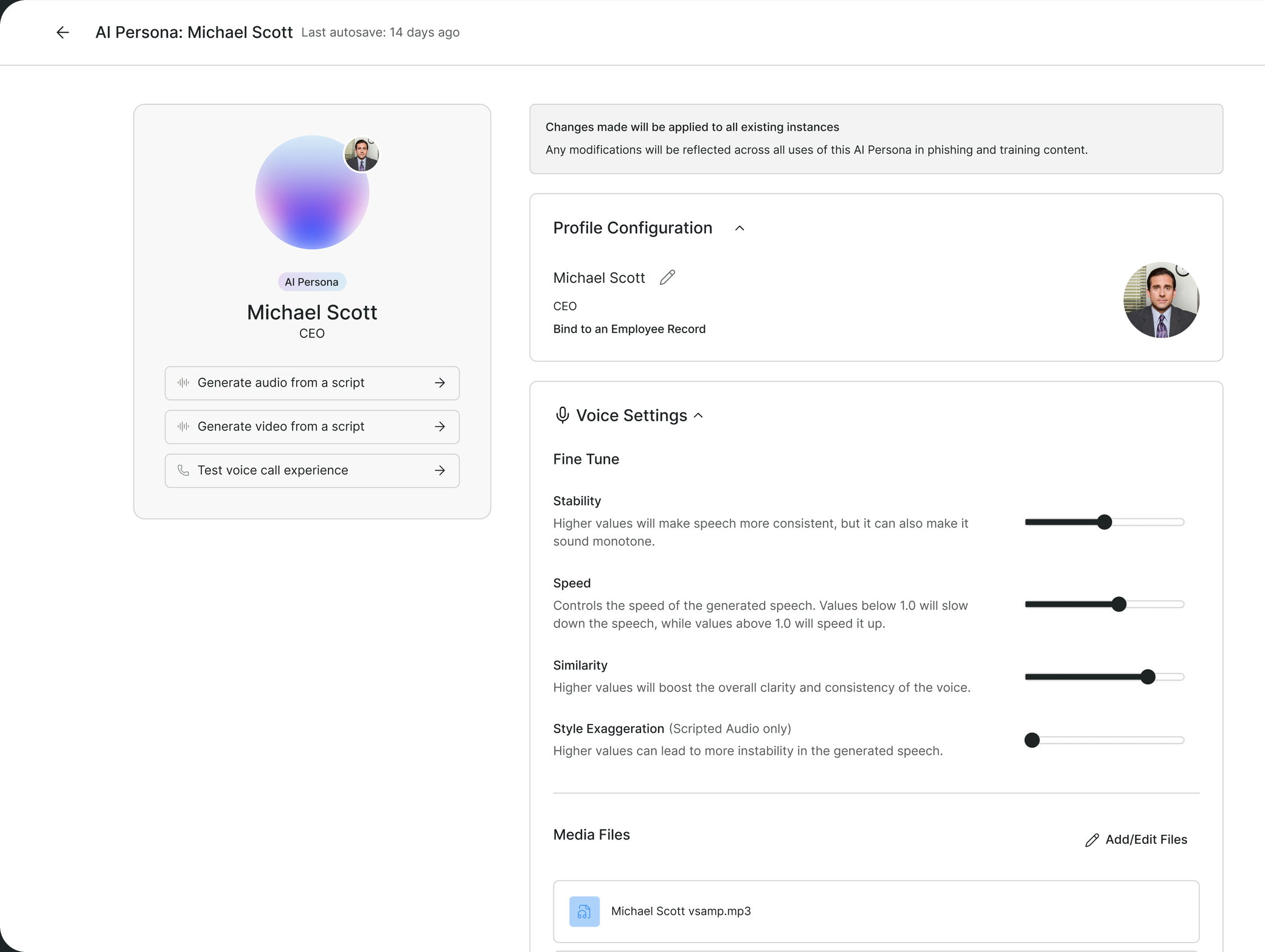
The voice sliders moved into a one-time setup. Most customers never need them again.
Put the videos first
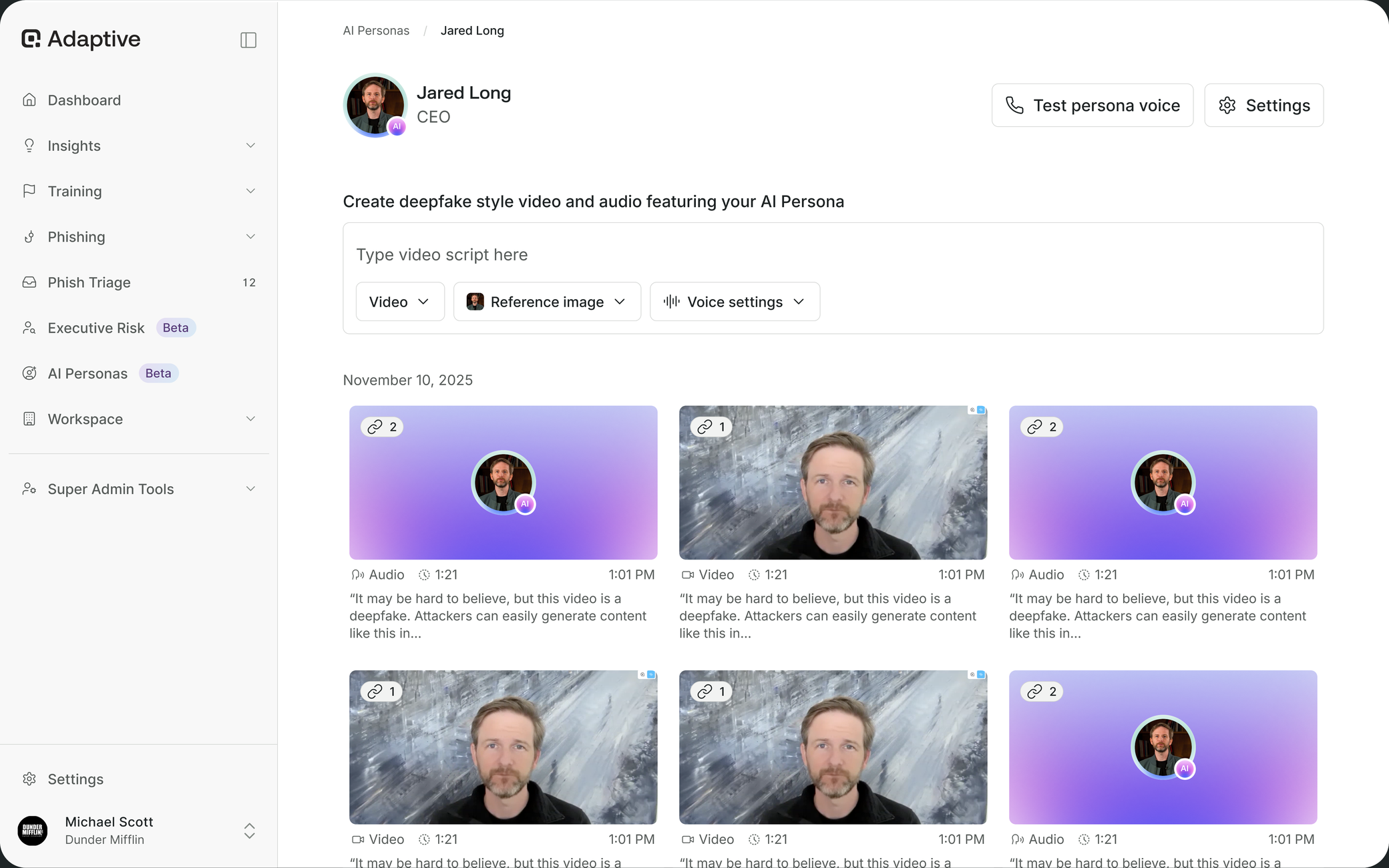
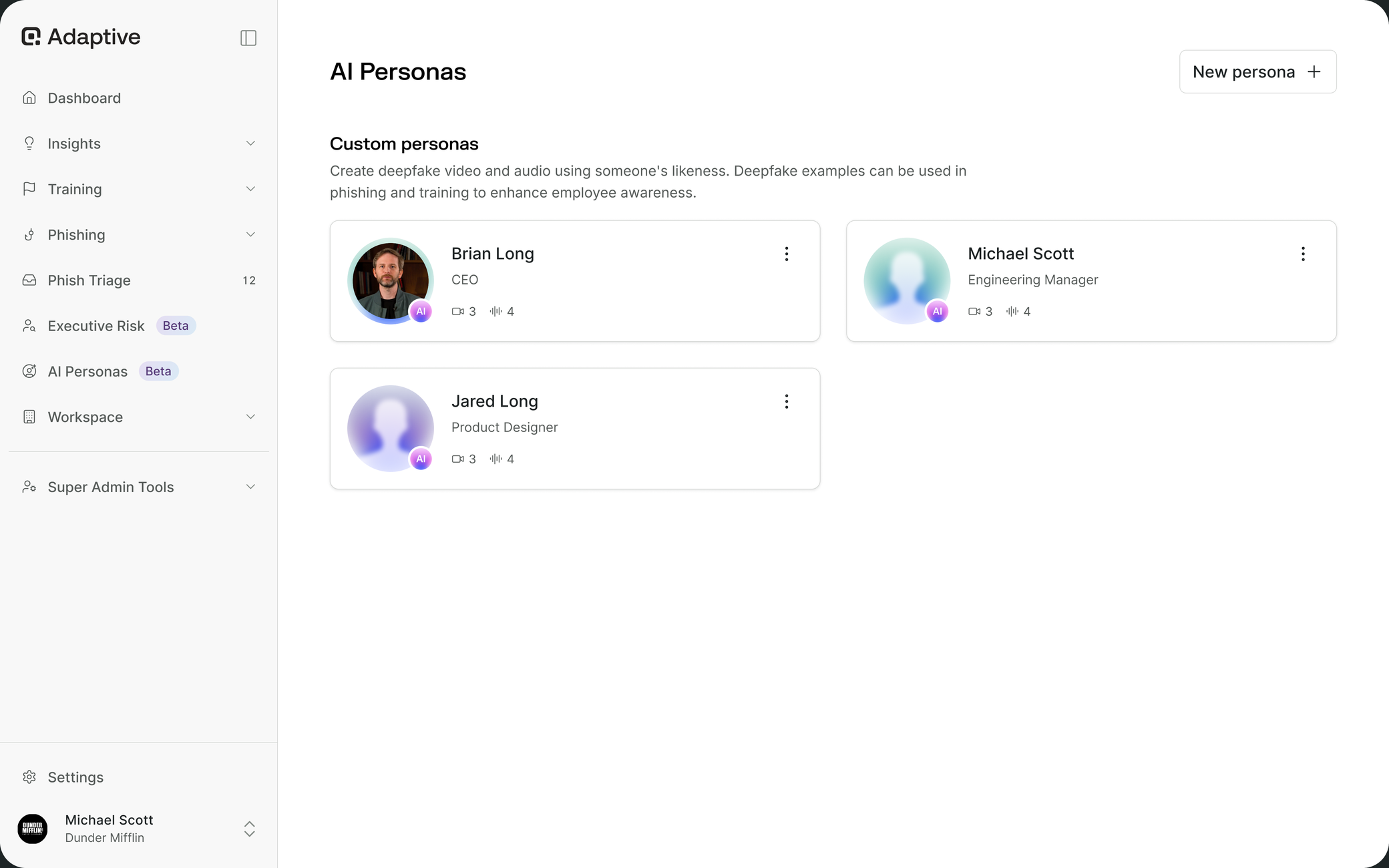
A persona’s page became a library of what has been made, with thumbnails, dates and the first line of each script.
No naming
Nobody was going to write useful names, and the list would have filled with “untitled.” The tool keeps things in order.
No steps
Type a script, make the video, change it, make it again. Everything starts on a sensible setting.
What happened
Customers who felt they had already paid for this got it, and the complaint stopped.
Not many people use it, and that was always going to be true. At each customer, between one and ten people work in the product at all. A few of them use this tool heavily.
The reps who book first meetings and the account executives who close deals both told me it helped them sell.
Inside Adaptive, the team stopped making deepfakes by hand. New accounts now start with the photo and voice already in place.
The photo booth
Customers kept asking to put the person somewhere other than the room in their photo. That was out of scope for the first release, so I built it on the side: describe a place, and the person appears there.
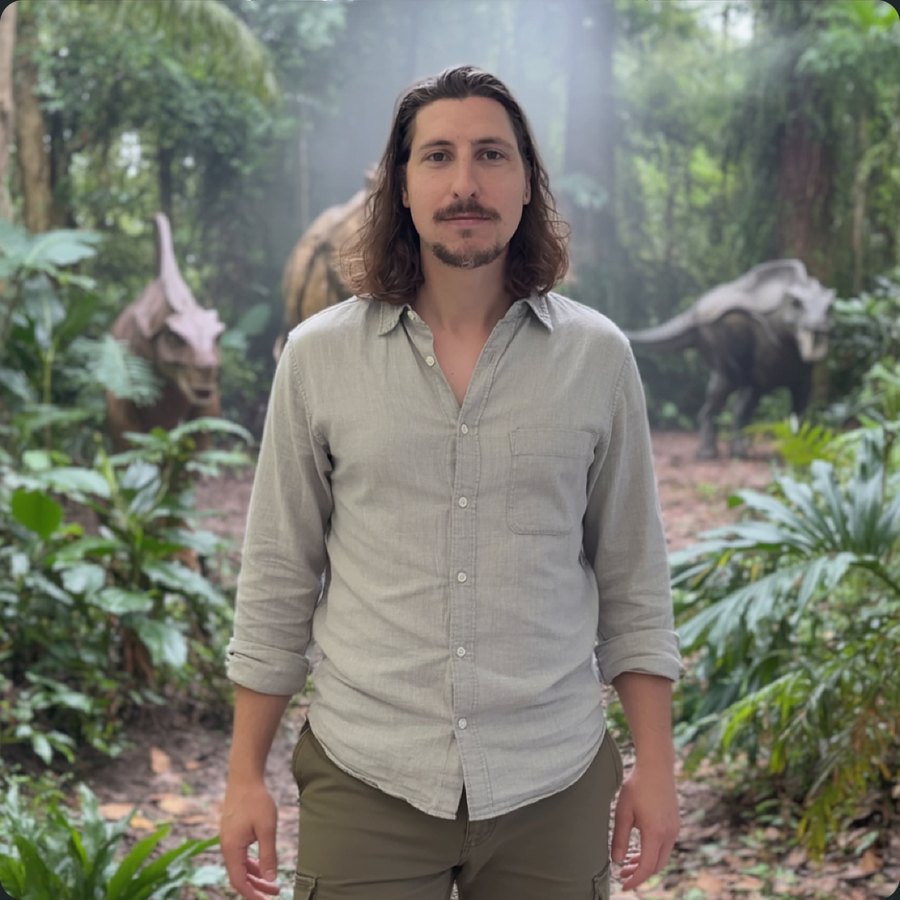


Photorealistic cinematic portrait of a person inside Jurassic Park. The subject is framed from mid-torso upward, centered in the frame. Eye-level camera angle, natural cinematic photography perspective. The subject stands calmly in the foreground, alert and composed, subtle tension in posture. Looking directly at the camera or slightly past it, focused expression. Background shows a lush prehistoric jungle environment — tropical plants, mist, rain-soaked atmosphere — with large dinosaur shapes or silhouettes visible in the distance, partially obscured by foliage. Soft, diffused jungle lighting with humidity and mist in the air, no harsh shadows. Shallow depth of field with the subject sharp and the jungle environment layered behind them.
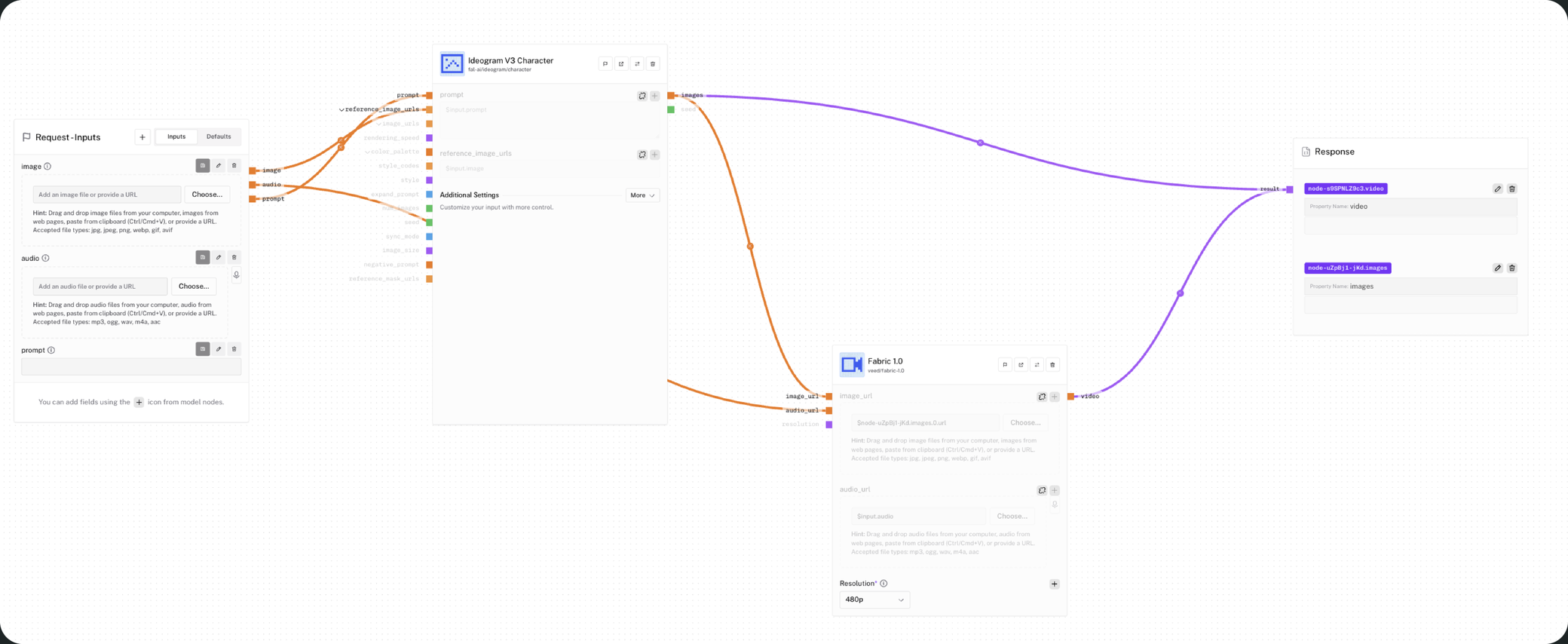
Then the CEO asked for a deepfake people could try for themselves at events and trade shows. I built a proof of concept on top of the side project to show the team it could be done. There was no product manager on it and engineering was stretched, so I designed the whole thing and shipped it with marketing.