The problem
I joined Berry Street as the 11th hire and the first designer. The company paid for advertising to win every patient and needed three or four visits to earn that back. Patients came to about two and stopped. Between appointments they never heard from us, so there wasn’t much reason to book another.
We were a small team with other things to fix, like the booking funnel and insurance claims. I proposed a patient app anyway, and made the case for it with the cofounders and my product manager.
Talking to patients and dietitians
Starting in May 2024 I interviewed more than 33 patients and 10 dietitians. The patients who’d dropped off told me their sessions were mostly information, the kind of thing they could have Googled.
“I didn’t come to my next appointment because I got all the information I needed, and I wasn’t sure what we’d talk about.”
The dietitians who held on to their patients stayed in touch between visits. They set small goals, and a lot of them had patients keep a food journal. They’d say something like:
“Write down what you eat for a week and we’ll find the patterns together.”
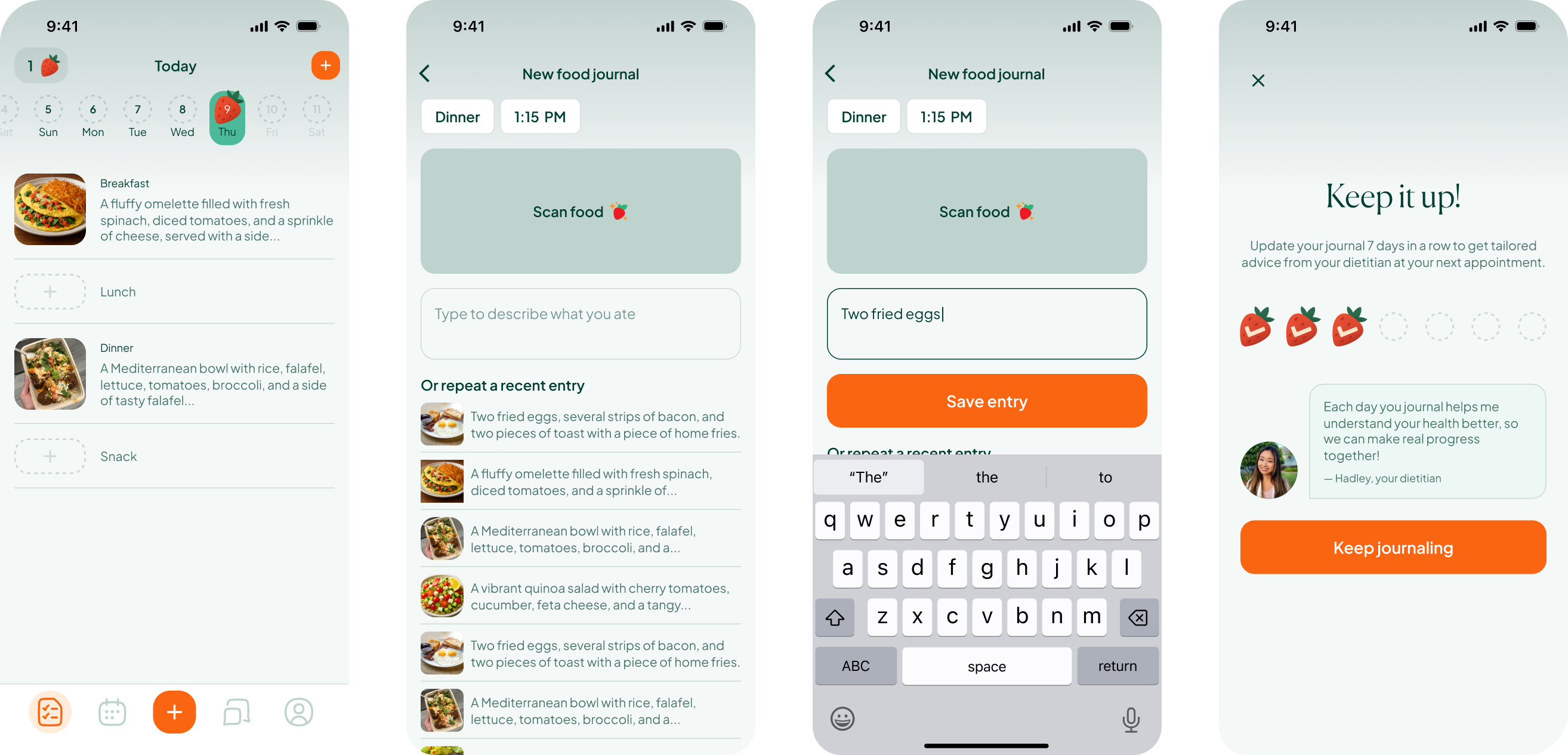
The app launched on iOS and Android in November 2024. Patients could book their next visit, message their dietitian and keep a food journal.
The AI food journal
MyFitnessPal and apps like it ask for calories, macros and grams of protein. Our patients found that overwhelming. The dietitians didn’t want the numbers either.
“Patients tend to get obsessed with numbers like calories or macros, so I tend to avoid discussing them. But it is helpful to have an idea of what somebody is eating. It helps them be honest.”
In ours, you take a photo of your meal and the AI writes down what’s on the plate and about how much of it. It doesn’t count calories. The models were bad at that anyway, and good at recognizing food. When we put it in front of beta testers, patients and dietitians both said it felt like magic.
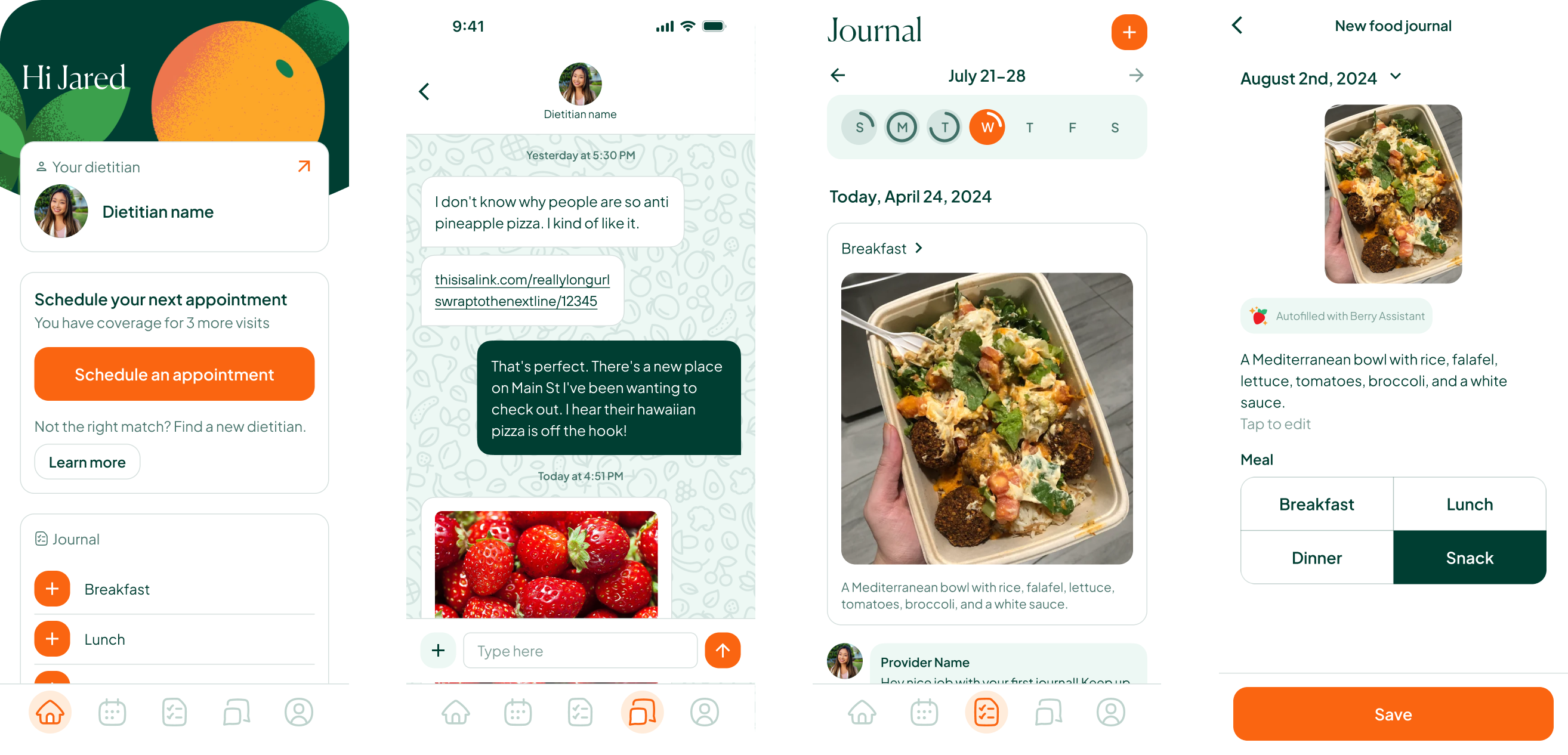
I tested the models and picked Gemini 2 Flash. Early versions described things that weren’t in the photo, so the prompt is strict. Its neutral wording came from a group of our best dietitians, who I ran every big decision past.
Describe all the food in the image without any of the accompanying items like plates, bowls, or silverware. Avoid overly descriptive language. Don’t include adjectives like “healthy” or “large.” Don’t make any assessments about healthiness. Include an estimate of portion size.
Results
Patients who used the food journal came to about 4.3 visits. Before the app the average was about 2.2, and Berry Street made money from the third visit on.
17,000 people were using the app every week. Dietitians commented on their patients’ entries, which gave patients a reason to keep logging.
After launch we added a way to repeat a recent entry, because people kept uploading the same photo of the same meal. That alone lifted journal entries 8%.
I also designed the AI tools dietitians used after an appointment: a notetaker that filled in charting and insurance paperwork, a follow-up email writer and a meal plan writer. Those saved them more than an hour a day.